
Politics & Society / 2026-10-20
The Rich Are Eating All the Barbecue Again
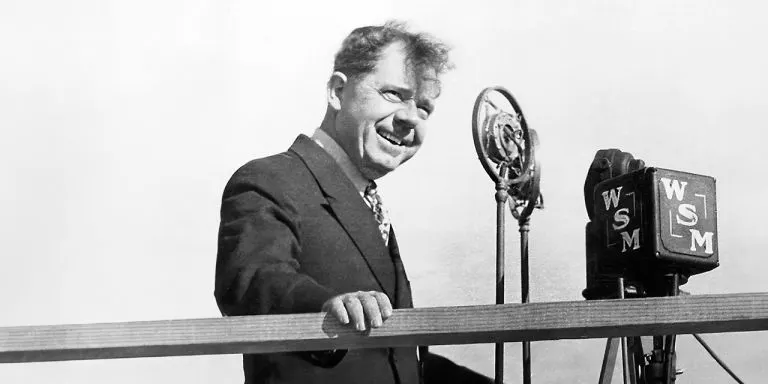
I am going to make a prediction.
America is going to produce another Huey P. Long.
I do not mean a politician with the same name, geography, or exact program. I mean a charismatic political figure who looks at extreme wealth, speaks about it in language ordinary people immediately understand, and builds a mass following around one blunt promise:
The rich are going to pay.
That person may already be emerging. The conditions that create someone like that are already here: visible luxury beside visible struggle, younger generations locked out of housing, education financed through debt, and a political class that can find trillions for emergencies but treats basic public services as unrealistic.
Eventually, somebody will explain all of this without charts, policy jargon, or a 40-page platform.
Huey Long explained it with a barbecue.
The Rich Ate the Barbecue
During the Great Depression, Long asked people to imagine a barbecue prepared for everyone. Then a handful of men walked to the table and took nearly all the food before everyone else could eat.
"What’s Morgan and Baruch and Rockefeller and Mellon going to do with all that grub?" he asked in his famous 1934 barbecue speech. Once they had everything they and their descendants could use, Long argued, they should have to put the excess back on the table.
That metaphor worked because everyone understood it. The problem was not that America lacked food, homes, machinery, or productive capacity. The problem was that abundance had been captured.
Long called his program Share Our Wealth. He proposed steep taxes on enormous incomes and fortunes, along with a guaranteed household income, pensions, education, and other benefits.
His arithmetic and some of his promises were disputed even in his own time. His political machine in Louisiana was intensely centralized, coercive, and accused of corruption. Predicting another Huey Long is not the same as asking for Long's methods to return.
It means recognizing the political opening he knew how to occupy.
When wealth becomes spectacular at the top and insecurity becomes ordinary everywhere else, eventually someone arrives with a story about who took the barbecue.
We Used to Tax the Top Differently
People sometimes say that America taxed the rich heavily for most of its history. That is not precisely true. The modern federal income tax began in 1913, and its first top rate was only 7%.
But during a long and economically important part of the modern income-tax era, the top marginal rate was far higher than it is today.
The rate reached 67% during World War I and 77% in 1918. It later rose above 90% during World War II and remained around that level through much of the 1950s. It was still 70% at the end of the 1970s. The top rate fell to 50% in the early 1980s and then to 28% after the 1986 tax overhaul. In 2026, the top statutory individual rate is 37%.
The IRS historical tables document that transformation.
A top marginal rate is not the percentage a wealthy person pays on every dollar. It applies only to income above a threshold. Deductions, shelters, capital-gains treatment, and enforcement also mean that the statutory rate is not the same as the effective rate actually paid.
Still, a 91% top bracket and a 37% top bracket communicate very different ideas about extreme income. One treats unlimited accumulation as a private entitlement. The other says that after a certain point, additional income has a greater public claim on it.
What High-Tax America Built
High marginal tax rates did not single-handedly create the postwar economy. America also benefited from its industrial position after World War II, strong unions, rapid population growth, technological development, and the destruction of competing industrial powers overseas.
But higher taxes existed alongside a political willingness to finance public capacity.
The country built highways, expanded universities, financed scientific research, supported homeownership, and created or enlarged programs that reduced the private cost of education, retirement, infrastructure, and health care.
The original GI Bill illustrates the scale. By the time its World War II provisions expired, the Department of Veterans Affairs says it had helped more than 12 million veterans pursue education or obtain low-interest home loans. That investment helped create a larger educated workforce and expanded homeownership, although discriminatory local administration prevented many Black veterans from receiving equal access to its benefits.
The interstate highway network was another enormous public undertaking. Federal Highway Administration research found substantial productivity benefits from road investment, including lower production costs for private industry. Businesses profited because the public paid to build the network on which commerce moved.
This is the part of the tax debate that is usually left out.
Taxes are described only as money government takes. Public systems are rarely described as wealth people receive: roads they do not have to construct themselves, schools they do not have to buy individually, research no single household could finance, and insurance against risks that would otherwise destroy a family.
The postwar system was deeply unequal and excluded many Americans from its full benefits. It should not be romanticized. But it understood something we have since tried to forget:
Public investment can make private life less expensive.
From Taxes to Tuition, Fees, and Debt
When government stops paying for something, the cost does not disappear.
It moves.
A tax-supported university can become a tuition-supported university. Public housing can become rent paid to a private landlord. A public benefit can become an insurance premium, user fee, loan payment, subscription, or household emergency.
This is what commodification looks like. Something treated as a shared public good becomes a product each person must purchase separately.
Higher education provides a clear example. The Government Accountability Office found that from fiscal year 2003 through 2012, state funding for public colleges fell 12% while median tuition rose 55%. Tuition supplied a growing share of college revenue, and students and families carried more of the cost. The GAO report does not claim that state cuts explain every tuition increase, but it documents the transfer of responsibility from public budgets to household budgets.
The price change was real. From January 2006 to July 2016, the Bureau of Labor Statistics found that college tuition and fees rose 63%, compared with 21% for consumer prices overall.
We did not make education cheaper by taxing less. We changed who received the bill.
Is That Inflation?
This is where the argument needs precision.
Reducing taxes on wealthy people does not mechanically cause every form of inflation. Economy-wide inflation can come from supply shocks, energy prices, labor shortages, monetary and fiscal policy, war, housing constraints, corporate pricing power, and many other forces.
Likewise, restoring public funding does not make a service free. It changes how the service is financed.
But when a government withdraws a subsidy and institutions replace it with higher tuition or fees, the price paid directly by households can rise. That is inflation in the price of that specific service, even if it is not the main cause of inflation across the entire economy.
The larger effect is a cost-of-living squeeze.
A family may receive a tax cut and still lose money if tuition, child care, health insurance, transportation, and housing rise by more than the tax savings. The official tax burden becomes smaller while the private tollbooths multiply.
That is the trick: we call taxes oppressive because they are visible, then accept a dozen private charges because they arrive on separate bills.
What Changed After the Tax Revolt
Beginning especially in the late 1970s and 1980s, American policy shifted toward lower top tax rates, deregulation, weakened labor power, privatization, and a greater reliance on markets to distribute essential services.
That shift did not eliminate government. It changed whom government protected, what it subsidized, and how benefits were delivered.
Income inequality grew. The Congressional Budget Office reports that inequality increased between 1979 and 2019, with income growing most at the top. Taxes and transfers continued to reduce inequality, but they operated against a market distribution that had become substantially more unequal.
Meanwhile, capital gains often received more favorable treatment than wages, allowing people whose money earns money to face different rules from people who live primarily on paychecks.
The result is not simply that the rich kept more income. Wealth bought assets, assets appreciated, appreciation produced more wealth, and ownership moved farther away from people who depended on wages.
The barbecue did not run out.
Ownership of the table concentrated.
Why the Next Huey Long Is Coming
A political system can tolerate inequality for a long time when people believe they are moving upward.
It becomes unstable when work no longer seems connected to security.
If a person can work full time and still struggle to afford rent, education, health care, or a family, lectures about patience stop working. If billionaires gain fortunes larger than public budgets while ordinary people are told that universal programs cost too much, eventually a politician will turn the contradiction into a sentence everyone can repeat.
That politician may come from the left. The politician may come from the right and combine economic populism with nationalism, scapegoating, or authoritarian power. Economic anger does not automatically produce humane politics.
That is why the prediction matters.
The next Huey Long will not necessarily be good. Charisma is not accountability. Attacking oligarchs does not prevent a leader from becoming autocratic. A movement that promises redistribution can still concentrate political power in one personality.
But someone is going to occupy this space.
The only question is who—and what else they bring with them.
Put the Food Back on the Table
The answer is not nostalgia for a perfect past that never existed. It is recovering the principle that extreme private wealth and widespread public deprivation are political choices.
Tax policy can fund public goods, reduce inequality, discourage extraction, and prevent wealth from converting itself into permanent political power. But higher rates alone are not enough. The government must close avoidance routes, treat income from wealth more consistently, enforce the law, and invest the revenue in things people can actually see and use.
Education. Housing. Infrastructure. Health care. Child care. Transit. Research. Public spaces. The foundations that make private opportunity possible.
People will support taxes when they can identify what those taxes bought. They will reject a system that taxes work, protects accumulated wealth, and then charges admission to every institution their taxes were supposed to build.
Huey Long understood the emotional core of the argument almost a century ago.
America prepared a barbecue large enough for everybody.
A small group took most of it.
My prediction is that a politician will soon become nationally powerful by demanding that they put some of it back.
Sources
- Huey P. Long, “Every Man a King” — U.S. Senate
- Historical Individual Income Tax Rates — Internal Revenue Service
- 2026 Federal Income Tax Rates — Internal Revenue Service
- Higher Education: State Funding Trends and Policies on Affordability — U.S. GAO
- College Tuition and Fees Increase 63 Percent Since January 2006 — Bureau of Labor Statistics
- The Distribution of Household Income, 2019 — Congressional Budget Office
- Veterans Benefits Administration History — Department of Veterans Affairs
- Productivity and the Highway Network — Federal Highway Administration